
Home
>
News
>
Company News
>
Zhuochuang Elite Explains The Advantages Of Helical Gear Planetary Reducers
Zhuochuang Elite Explains The Advantages Of Helical Gear Planetary Reducers
2026/02/04
First, let's discuss ordinary gear reducers. Standard gear reducers utilize straight-cut (spur) gears. The primary drawback of straight-cut gears is the vibration generated during operation—a vibration that is inherent and cannot be eliminated. Measures such as design alterations or changes in manufacturing materials cannot avoid it. At any given moment, variations can occur along the entire involute profile of the tooth. This creates a persistent and unsolvable issue: each tooth engagement generates this vibration.
Consequently, this vibration induces significant loads on the gears, which in turn leads to noise. Another disadvantage is that the additional strength gained from having two pairs of teeth in contact simultaneously during part of the engagement cycle cannot be fully utilized. This is because the stress is determined by the condition of single-tooth contact within the cycle, resulting in wasted energy—a problem that we hope will be addressed in the future.
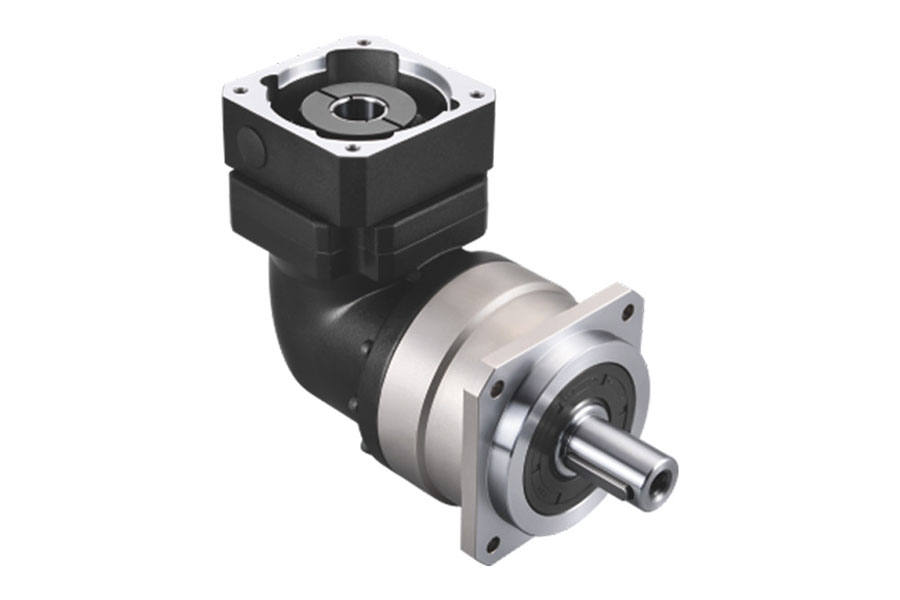
In contrast, helical gear planetary reducers are different. As the name suggests, they employ helical gears internally. Helical gears offer higher transmission efficiency and demonstrate superior performance in transmission accuracy, especially in high-power planetary reducers, providing greater torque and more stable power transmission.
A helical gear planetary reducer can be conceptualized as a series of thin gear slices stacked together but offset from one another. When the gear operates, each slice contacts a different part of the tooth profile. This design effectively compensates for errors in each individual gear slice. This compensation is highly effective for tooth elasticity, resulting in a system where errors within 10mm can be averaged out. This significantly reduces vibration, allowing the gear to run as smoothly under load as a gear with an error of less than 1mm.
Furthermore, at any given moment (assuming an overlap ratio of about 1.5), approximately two teeth are in mesh about half the time. This provides an additional benefit in terms of strength. Therefore, the strength can be based on 1.5 times the tooth width instead of just a single tooth width.
Manufacturing and assembling a stack of many thin slices to solve the problems of straight-cut gears would be both difficult and uneconomical. Hence, the integrated helical gear reducer was developed, featuring teeth cut along a helix. Unlike straight gears, helical gears generate an undesired axial force. However, the benefits in terms of reduced vibration and increased strength far outweigh the drawbacks posed by axial thrust and the slightly higher manufacturing cost. This is why helical gears are chosen over straight-cut gears in reducer manufacturing.